Loading gallery...
Loading gallery...
We use cookies to analyse site usage and improve your experience. For more information on how we use cookies, please see our Terms of Use and Privacy Policy .
Browse through our collection of media resources
This video presents a brief intervention scenario involving Olena, a 38-year-old Ukrainian refugee from Kharkiv who is living in Poland with her 11-year-old son and a cousin in accommodation for refugees. After finding part-time work and developing a new social network, Olena feels more financially secure and less isolated, but she has also started drinking alcohol more frequently during social gatherings and has taken up smoking, which has gradually become a regular habit. During a routine visit to the accommodation, Ania, a social worker, uses the opportunity to initiate a supportive conversation about health and lifestyle. With Olena’s agreement, she explores several health-related behaviours, including alcohol use, smoking, diet and physical activity, and asks whether any of these habits have changed recently. Olena identifies alcohol and tobacco use as the main changes in her lifestyle and explains the important social role these behaviours have played in helping her relax and connect with others. Ania acknowledges these benefits while also exploring Olena’s concerns about their possible effects on her health. Together, they agree to focus first on alcohol use. Using a brief screening questionnaire, Ania discusses Olena’s drinking pattern, provides feedback on her level of risk and explores her reaction to the result. The conversation then shifts towards realistic options for change without asking Olena to give up the social relationships that are important to her. Ania provides an action-planning leaflet and practical information on healthier lifestyle choices, emphasizing that even small changes can have benefits. The video illustrates how an integrated, person-centred brief intervention can address multiple interacting risk factors while taking account of the individual’s social circumstances, priorities and readiness to change.
Short Advice Leaflet in english produced by PEACHD
Brief interventions are recognized by WHO as effective for addressing the risk factors of noncommunicable diseases (NCDs), including smoking, alcohol consumption, insufficient physical activity, unhealthy diets and over- or underweight. There are, however, few data on the use of brief interventions or on the perspectives of health-service providers in the WHO European Region on the barriers to and facilitators of their delivery. This report is part of the BRIEF project of the WHO Regional Office for Europe. The aim of the project is to advance implementation and use of integrated brief interventions for NCD risk factors in primary care in the WHO European Region. The report of this mixed-method study presents the results of a questionnaire-based survey and in-depth interviews with primary‑care providers on three main topics: current uptake of brief interventions by providers; barriers, facilitators and recommendations from providers for effective brief interventions in primary care; and policy recommendations for effective facilitation and implementation of brief interventions.
This guide from the WHO Regional Office for Europe offers practical guidance for planning alcohol-free meetings, conferences, receptions, and network and workplace events. Alcohol is a leading risk factor for disease and social harm. In addition to health risks and safety concerns, its presence in professional environments can create discomfort and exclusion. Designed for workplaces and institutions committed to well-being, this guide outlines the benefits of alcohol-free gatherings, offers tips for inclusive planning and respectful communication, and includes a ready-to-use checklist, beverage recipes, sample activities and communication materials. Alcohol-free events are not about restriction; they are a way to demonstrate leadership in health promotion and optimize the health of the workforce. This guide helps make that vision a reality.
Alcohol-related harm causes millions of deaths each year and remains a major, preventable obstacle to health, equity and sustainable development. This report documents progress since the 2018 launch of SAFER – WHO's initiative to help countries implement the five most effective and cost–effective alcohol policy measures: strengthening restrictions on alcohol availability; advancing and enforcing drink–driving countermeasures; facilitating access to screening, brief intervention and treatment; enforcing bans or comprehensive restrictions on alcohol advertising, sponsorship and promotion; and raising prices through excise taxes and pricing policies. Formally mandated by the Global Alcohol Action Plan 2022–2030, SAFER has become WHO's main platform for turning political commitment into delivery – implementing what works, strengthening monitoring and protecting policy-making from commercial interference. Drawing on country experiences from Uganda, Nepal and Ireland, regional peer-learning across WHO regions, and a broad network of United Nations and civil society partners, it shows how SAFER is being implemented and adapted at both national and subnational levels. It closes by setting out the priorities for the next phase – consolidating and scaling progress under the Global Alcohol Action Plan 2022–2030 and towards SDG target 3.5, the global commitments to reduce the harmful use of alcohol.
This video provides an overview of alcohol screening and brief intervention in primary care, with a particular focus on preventing fetal alcohol spectrum disorders. It explains why excessive alcohol use is relevant to routine health care, outlines the key steps of alcohol SBI, gives examples of non-judgemental conversation prompts, and highlights the importance of advising patients who are pregnant or may become pregnant that there is no known safe amount, time, or type of alcohol use during pregnancy.
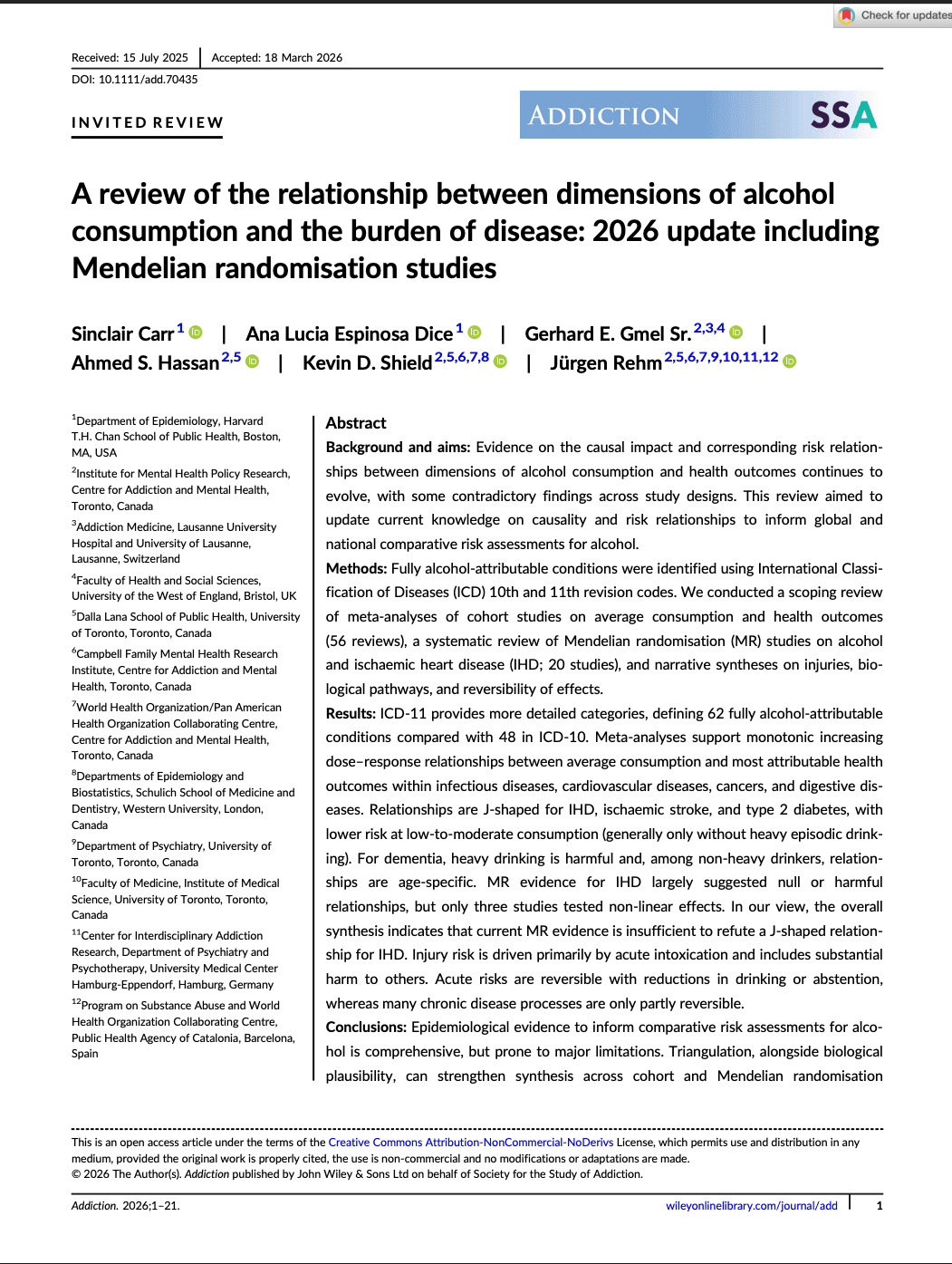
Background and aims: Evidence on the causal impact and corresponding risk relationships between dimensions of alcohol consumption and health outcomes continues to evolve, with some contradictory findings across study designs. This review aimed to update current knowledge on causality and risk relationships to inform global and national comparative risk assessments for alcohol. Methods: Fully alcohol-attributable conditions were identified using International Classification of Diseases (ICD) 10th and 11th revision codes. We conducted a scoping review of meta-analyses of cohort studies on average consumption and health outcomes (56 reviews), a systematic review of Mendelian randomisation (MR) studies on alcohol and ischaemic heart disease (IHD; 20 studies), and narrative syntheses on injuries, biological pathways, and reversibility of effects. Results: ICD-11 provides more detailed categories, defining 62 fully alcohol-attributable conditions compared with 48 in ICD-10. Meta-analyses support monotonic increasing dose–response relationships between average consumption and most attributable health outcomes within infectious diseases, cardiovascular diseases, cancers, and digestive diseases. Relationships are J-shaped for IHD, ischaemic stroke, and type 2 diabetes, with lower risk at low-to-moderate consumption (generally only without heavy episodic drinking). For dementia, heavy drinking is harmful and, among non-heavy drinkers, relationships are age-specific. MR evidence for IHD largely suggested null or harmful relationships, but only three studies tested non-linear effects. In our view, the overall synthesis indicates that current MR evidence is insufficient to refute a J-shaped relationship for IHD. Injury risk is driven primarily by acute intoxication and includes substantial harm to others. Acute risks are reversible with reductions in drinking or abstention, whereas many chronic disease processes are only partly reversible. Conclusions: Epidemiological evidence to inform comparative risk assessments for alcohol is comprehensive, but prone to major limitations. Triangulation, alongside biological plausibility, can strengthen synthesis across cohort and Mendelian randomisation studies, and the target trial framework can help future studies avoid design-induced biases. Comparative risk assessments with ischaemic heart disease should, at this point, prioritise evidence from cohort studies. KEYWORDS alcohol, average volume, burden of disease, causality, comparative risk assessment, heavy episodic drinking, Mendelian randomisation, mortality, patterns of drinking, risk relation
This WHO guideline provides evidence-based recommendations to support the identification, assessment and management of priority mental, neurological and substance use conditions, particularly in low- and middle-income countries. It is designed to help non-specialist health workers deliver care in primary health care, secondary care and district-level services, where specialist resources may be limited. The guideline forms part of WHO’s Mental Health Gap Action Programme and supports the integration and scale-up of care for conditions such as mental disorders, neurological disorders and substance use disorders within general health services. It is intended for health-care workers, programme managers, planners, policy-makers, NGOs and researchers involved in strengthening services for mental health and substance use.
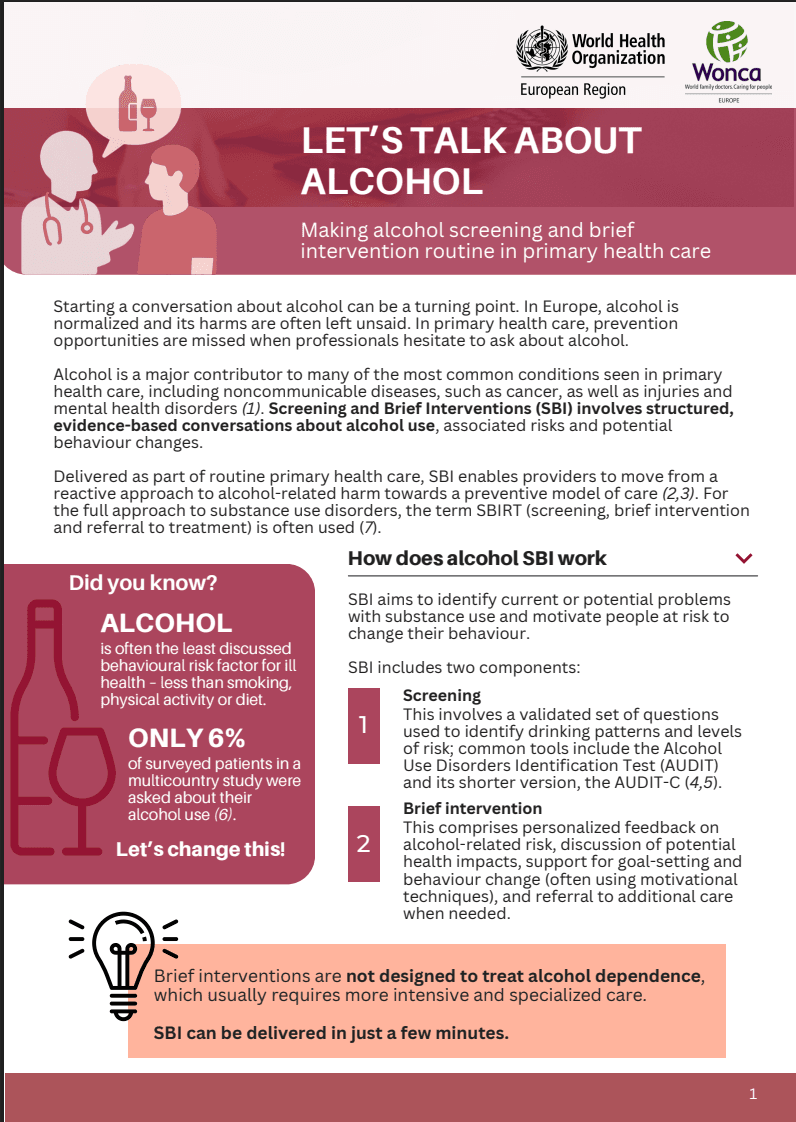
Short 2 pager encouraging alcohol screening and brief intervention to become a standard part of routine primary health care.
In 2020, an estimated 741 300 new cancer cases, or 4.1% of all new cancer cases globally, were attributable to alcohol consumption. Alcoholic beverage consumption is a risk factor for numerous other health conditions in addition to cancer. A Working Group of 20 independent international experts, convened by the International Agency for Research on Cancer (IARC) from June to October 2024, reviewed the body of evidence on the effects of selected alcohol policies on reducing alcoholic beverage consumption. Population-level alcohol policy interventions related to (i) taxation and pricing, (ii) physical availability, (iii) alcohol marketing, and (iv) coordinated and other multiple alcohol policy interventions were evaluated. In addition, health care-based interventions (i.e. screening and brief interventions, and psychosocial and pharmacotherapy interventions) were reviewed but not evaluated.
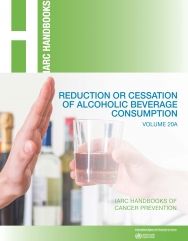
Worldwide, in 2020, an estimated 741 300 new cancer cases were attributable to alcohol consumption. This represents 4.1% of all new cancer cases, 6.1% among men and 2.0% among women. A Working Group of 15 independent international experts, convened by the International Agency for Research on Cancer (IARC) from February to May 2023, evaluated the body of literature assessing the effectiveness of reduction or cessation of alcoholic beverage consumption in reducing risk of alcohol-related cancers. The Working Group reviewed and summarized the available epidemiological evidence and provided evidence-based evaluations of the effectiveness of reduction or cessation of alcohol consumption in reducing risk of cancers of the oral cavity, pharynx, larynx, oesophagus, colorectum, liver, and female breast. The Working Group also identified and evaluated the mechanisms of alcohol-related carcinogenesis that may be reversed upon cessation. To complement the evaluations, this publication presents background information on the alcohol-related cancer burden worldwide, the population attributable fraction of alcohol-related cancers, and determinants of cessation.
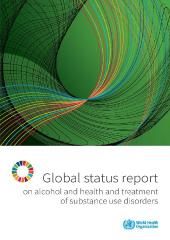
This report presents a comprehensive global update on the status and progress around the two key indicators set out in SDG health target 3.5: alcohol consumption and treatment coverage for substance use disorders. It sets out eight priority areas where action needs to be taken. Despite some reduction in alcohol consumption and related harm worldwide since 2010, the health and social burden due to alcohol use remains unacceptably high. Younger people are disproportionately affected by alcohol consumption: the highest proportion of alcohol attributable deaths – 13% – in 2019 was among people aged 20-39 years. While we have seen a slight increase in the number of countries adopting national alcohol policies, little progress has been made in implementing the high-impact policy interventions proven to reduce alcohol-related harm, such as impactful pricing policies or comprehensive marketing and availability restrictions. The WHO Global alcohol action plan 2022-2030 sets out these ‘best buys’ and supports countries to strengthen actions on reducing alcohol-related harms, but implementation efforts must be stepped up urgently. The report also highlights another critical gap: access to quality and ethical treatment for substance use disorders is still largely limited or unaffordable for those most in need. This affects almost half a billion of people worldwide who live with alcohol or drug use disorders. Stigma, discrimination and misconceptions about the efficacy of treatment contribute to gaps in health services and low prioritization of substance use disorders by health and development agencies. We are not on track to achieve significant progress for SDG target 3.5 unless we accelerate action now. WHO remains committed to working with governments, international partners, civil society organizations and, as appropriate, other stakeholders to make real and measurable progress towards these targets. Given the heavy health and social burden that psychoactive substance use continues to have on people, their families and communities across the world, efforts to reduce psychoactive substance use must be a public health priority
Showing 1–12 of 99 results
